Solid:
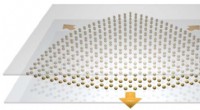
* Fixed shape and volume: Solids maintain their shape and volume regardless of their container.
* Strong intermolecular forces: The particles in a solid are closely packed together and strongly attracted to each other.
* Limited movement: The particles in a solid can only vibrate in fixed positions.
* Examples: Ice, rock, wood, metal.
Liquid:
* Fixed volume, but variable shape: Liquids maintain their volume but take the shape of their container.
* Weaker intermolecular forces than solids: The particles in a liquid are still close together but have more freedom to move around.
* Moderate movement: Particles in a liquid can move around and slide past each other.
* Examples: Water, oil, juice, mercury.
Gas:
* No fixed shape or volume: Gases expand to fill the entire container they occupy.
* Weakest intermolecular forces: The particles in a gas are far apart and have minimal attraction to each other.
* High movement: The particles in a gas move freely and rapidly in all directions.
* Examples: Air, oxygen, carbon dioxide, helium.
Factors Affecting Physical State:
* Temperature: Increasing temperature generally increases the energy of particles, causing them to move more freely and transition from solid to liquid (melting) or from liquid to gas (boiling/evaporation).
* Pressure: Increasing pressure generally forces particles closer together, favoring the liquid or solid state.
Other States of Matter:
* Plasma: An ionized gas, found in stars and fluorescent lights.
* Bose-Einstein condensate: A state of matter where atoms are cooled to near absolute zero and behave as a single entity.
The physical state of a substance is an important property that influences its behavior and properties. Understanding the differences between solids, liquids, and gases is essential in many scientific fields.