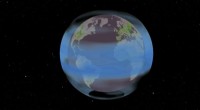
1. Evaporation: The sun's energy heats water in oceans, lakes, and rivers, causing it to transform into water vapor and rise into the atmosphere.
2. Condensation: As the water vapor rises and cools, it condenses back into tiny water droplets, forming clouds.
3. Precipitation: The water droplets in clouds grow larger and heavier, eventually falling back to Earth as rain, snow, sleet, or hail.
4. Runoff: Once precipitation reaches the ground, it flows over the surface, collecting in rivers, streams, and lakes. Some water soaks into the ground, becoming groundwater.
5. Infiltration: Some precipitation infiltrates the soil, becoming groundwater. This water can be stored underground or flow slowly through the soil.
6. Transpiration: Plants absorb water from the soil and release it into the atmosphere through their leaves.
The cycle continues: The water that falls back to Earth eventually returns to the oceans, rivers, and lakes, completing the cycle.
Key aspects of the continuous movement of water:
* It's a continuous loop: The water cycle has no beginning or end.
* It's powered by the sun: The sun's energy drives evaporation, which is the primary force behind the entire cycle.
* It involves all states of matter: The cycle involves water in liquid (oceans, rivers), solid (ice, snow), and gaseous (water vapor) states.
* It's essential for life: The water cycle provides fresh water for drinking, agriculture, and ecosystems.
* It influences weather patterns: The movement of water in the atmosphere affects wind patterns, precipitation, and temperature.
* It shapes the Earth's surface: Erosion, deposition, and the formation of landforms are influenced by the continuous movement of water.
The continuous movement of water is vital to life on Earth. It's a complex and dynamic system that plays a key role in maintaining the planet's climate, shaping its landscapes, and sustaining all living organisms.