* Electric and Magnetic Fields: Charged particles create electric fields. When they move, they also create magnetic fields.
* Acceleration: When a charged particle accelerates (speeds up, slows down, or changes direction), the electric and magnetic fields around it change as well.
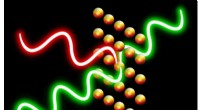
* Waves: These changes in the fields don't happen instantaneously. Instead, they propagate outward from the accelerating charge like ripples on a pond, forming an electromagnetic wave.
Examples:
* Light from the Sun: The Sun's core contains charged particles that are constantly accelerating, generating light.
* Radio waves from antennas: Radio antennas use electrons moving back and forth (accelerating) to create radio waves.
* Microwaves in your oven: Electrons in the magnetron accelerate and generate microwaves.
* X-rays from medical machines: Electrons are accelerated to high speeds and then abruptly stopped, creating X-rays.
Key Points:
* Frequency and Wavelength: The frequency (how fast the waves oscillate) and wavelength (the distance between wave crests) of electromagnetic waves are determined by the energy of the accelerating charged particles.
* Electromagnetic Spectrum: The entire range of electromagnetic waves, from low-frequency radio waves to high-frequency gamma rays, is called the electromagnetic spectrum.
In short, electromagnetic waves are a consequence of the fundamental interaction between electric charges and the electric and magnetic fields they create.