Direct Measurement Instruments:
* Current Meters: These are the most common type and come in various forms, including:
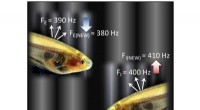
* Acoustic Doppler Current Profilers (ADCPs): Emit sound waves and measure the Doppler shift to determine current speed and direction at different depths.
* Electromagnetic Current Meters: Measure the voltage induced in a conductor by the movement of saltwater through Earth's magnetic field.
* Propeller Current Meters: Use a propeller to measure the speed of the current.
Indirect Measurement Instruments:
* Drifting Buoys: These buoys are equipped with GPS trackers and sensors to measure water temperature, salinity, and other variables. They drift with the current, allowing scientists to track its movement over time.
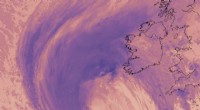
* Satellite Altimetry: Satellites use radar to measure the height of the sea surface. Variations in sea surface height can be used to infer ocean currents.
* Lagrangian Floats: These floats are released at specific locations and track their movement over time using acoustic signals or satellite communication. They provide information about the movement of water masses.
Other Methods:
* Dye Tracing: Injecting dye into the water and tracking its movement can reveal the direction and speed of currents.
* Acoustic Tomography: Uses sound waves to map the internal structure of the ocean, including currents.
The choice of instrument depends on the specific application, the desired accuracy, and the location and depth of the measurement.