1. Momentum is conserved in interactions:
* Newton's third law implies that when two objects interact, they exert equal and opposite forces on each other.
* Since force is the rate of change of momentum (F = dp/dt), equal and opposite forces result in equal and opposite changes in momentum for the two objects.
* This means the total momentum of the system (both objects combined) remains constant, even though individual momenta change.
2. Examples:
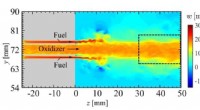
* Rocket Propulsion: A rocket expels hot gases backward (action). The reaction is the rocket moving forward. The momentum of the expelled gases is equal and opposite to the momentum gained by the rocket, ensuring the overall momentum of the system remains constant.
* Collision: When two cars collide, they exert equal and opposite forces on each other. The momentum lost by one car is gained by the other, conserving the total momentum of the system.
3. Importance in understanding interactions:
* Newton's third law, through the lens of momentum conservation, allows us to understand and predict how objects will move during interactions.
* It provides a fundamental basis for understanding the behavior of systems ranging from microscopic particles to celestial bodies.
In summary:
Newton's third law is a crucial foundation for understanding the concept of momentum conservation. It ensures that in any interaction, momentum is neither created nor destroyed, only transferred between objects. This principle is fundamental to describing the motion of objects in the universe.