1. Chemical Bonding:
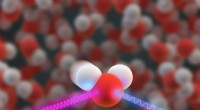
* Ionic Bonding: The strongest type of chemical bond occurs when atoms with opposite charges attract each other, forming an ionic compound. For example, sodium (Na) loses an electron to become positively charged (Na+) and chlorine (Cl) gains an electron to become negatively charged (Cl-), resulting in the attraction that forms sodium chloride (NaCl), or table salt.
* Polar Covalent Bonding: Even in covalent bonds, where atoms share electrons, the unequal sharing of electrons can create a slight positive charge on one atom and a slight negative charge on the other. This difference in charge leads to an attraction between the atoms, known as a dipole-dipole interaction.
2. Everyday Phenomena:
* Static Electricity: When materials rub against each other, they can transfer electrons. This can leave one material with a net positive charge and the other with a net negative charge. The attraction between these opposite charges is what causes static cling and sparks.
* Lightning: Lightning is a dramatic example of electrostatic discharge, where a build-up of opposite charges in the atmosphere causes a sudden release of energy.
3. Biological Systems:
* Protein Folding: The attraction of opposite charges between amino acids in a protein chain is a key factor in determining its three-dimensional structure. This structure is crucial for the protein's function.
* Cell Membrane: The phospholipid bilayer that forms cell membranes contains charged molecules. The attraction of opposite charges helps maintain the membrane's structure and plays a role in regulating the passage of substances across the membrane.
4. Electronics:
* Circuits: The flow of electrical current is driven by the attraction between opposite charges. Batteries and power sources create a potential difference that drives electrons through a circuit.
* Capacitors: Capacitors store electrical energy by accumulating opposite charges on two conductive plates separated by an insulator.
5. Physics:
* Electromagnetism: The interaction of electric and magnetic fields is based on the attraction and repulsion of charges.
* Electrostatic Force: This force governs the attraction or repulsion between charged objects.
In short, the attraction of opposite electrical charges is a fundamental force that is essential for a wide range of natural and technological phenomena.