Here's why:
* First Law: This law states that energy cannot be created or destroyed, only transformed from one form to another. It's a statement of energy conservation.
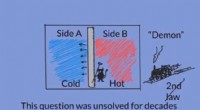
* Second Law: This law states that the entropy of an isolated system always increases over time. It describes the direction of energy flow and the tendency for systems to move towards disorder.
While the two laws are connected, they are not logically interdependent. The First Law provides the foundation for understanding energy transformations, while the Second Law explains the constraints and directionality of these transformations.
Here's a way to think about it:
Imagine a closed system where you can only observe changes in energy. The First Law says that the total energy in the system remains constant, even though it might change forms (e.g., heat to work). The Second Law says that, over time, the energy in the system will become less organized and more dispersed.
The relationship between the First and Second Law is not one of derivation, but rather of complementarity. They work together to provide a complete picture of energy and its transformations in the universe.
It's important to note:
While you cannot derive the First Law from the Second, you can *understand* the First Law as a necessary condition for the Second Law to hold. If energy could be created or destroyed, the Second Law would not be a universal principle, as entropy would not always increase.
In conclusion, the First and Second Laws of Thermodynamics are independent but interconnected principles that describe different aspects of energy and its behavior. They work together to provide a comprehensive understanding of the fundamental laws governing the universe.