In a non-relativistic context, gravity can be thought of as a force that pulls objects towards each other. This force is proportional to the product of the masses of the objects and inversely proportional to the square of the distance between them. However, general relativity shows that this is only an approximation that works well for objects moving at speeds much slower than the speed of light and in weak gravitational fields.
In general relativity, the curvature of spacetime is described by the Einstein field equations. These equations relate the curvature of spacetime to the distribution of mass and energy in the universe. The more mass and energy there is in a region of space, the more curved spacetime will be in that region.
The curvature of spacetime can have a number of effects on objects that move through it. For example, it can cause objects to accelerate, decelerate, or change direction. It can also cause objects to be deflected by the gravitational field of other objects.
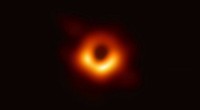
General relativity is a very complex theory, but it is also a very successful theory. It has been able to explain a wide variety of phenomena, including the orbit of the planets around the Sun, the bending of light around black holes, and the expansion of the universe. General relativity is one of the most important theories in physics, and it has revolutionized our understanding of the universe.