In mathematical terms, general relativity describes gravity using Einstein's field equations, which relate the curvature of spacetime (represented by the curvature tensor) to the distribution of mass and energy (represented by the stress-energy tensor). These equations show that the presence of mass or energy in a region of spacetime causes the curvature to increase, which in turn influences the motion of other objects in that region.
One important aspect of general relativity is that it treats space and time as a single entity known as spacetime. In this theory, gravity is not a force, as it was traditionally considered, but rather a consequence of the curvature of spacetime. Objects with mass or energy distort spacetime, and this curvature tells other objects how to move.
General relativity has successfully passed numerous experimental and observational tests, including:
1. The bending of light: The theory predicted that the light from distant stars would be slightly bent as it passes near massive objects like the sun. This effect, known as gravitational lensing, has been confirmed by observations.
2. The precession of Mercury's orbit: General relativity predicted a slight shift in the orbit of the planet Mercury, known as the precession of the perihelion. This effect has been precisely measured and matches the predictions of the theory.
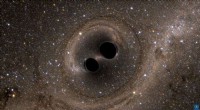
3. Gravitational waves: The existence of gravitational waves, ripples in spacetime caused by the acceleration of massive objects, was predicted by general relativity and recently detected directly by the LIGO (Laser Interferometer Gravitational-Wave Observatory).
General relativity has revolutionized our understanding of gravity and has become the cornerstone of modern physics when describing phenomena on large scales, such as the behavior of galaxies and black holes. It continues to serve as a foundation for studying the universe and has opened new avenues of research in areas such as cosmology and astrophysics.