Gravity is a fundamental force in nature that attracts all objects with mass toward each other. It is one of the four fundamental forces, along with electromagnetism, the strong force, and the weak force.
The source of gravity is mass. The more massive an object is, the stronger its gravitational pull. The gravitational force between two objects is proportional to the product of their masses and inversely proportional to the square of the distance between them.
This means that the force of gravity between two objects:
* Increases as the masses of the objects increase
* Decreases as the distance between the objects increases
How does gravity influence the movement of objects in space?
Gravity is responsible for the motion of objects in space. It is what keeps the planets in orbit around the sun, the moon in orbit around Earth, and galaxies bound together.
Gravity also plays a role in the formation of stars and galaxies. When large clouds of gas and dust collapse under their own gravity, they form stars and planets.
The force of gravity is relatively weak compared to the other fundamental forces. However, it is strong enough to have a significant impact on the movement of objects in space.
Here are some examples of how gravity influences the movement of objects in space:
* The Earth's gravity pulls objects toward its center, keeping them from flying off into space.
* The Moon's gravity pulls on the Earth, causing the ocean tides.
* The Sun's gravity keeps the planets in the Solar System in orbit.
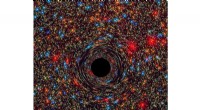
* The gravity of galaxies pulls on other galaxies, causing them to move toward each other or away from each other.
Gravity is a fundamental force in nature that has a significant impact on the movement of objects in space. It is responsible for the motion of planets, the formation of stars and galaxies, and much more.