Gravity is a force of attraction between any two objects with mass. The greater the mass of an object, the greater its gravitational pull. The distance between two objects also affects the strength of gravity. The closer two objects are, the stronger their gravitational pull.
How Does Gravity Work?
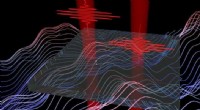
Physicists don't fully understand how gravity works, but they have developed several theories. One of the leading theories is general relativity. General relativity describes gravity as a curvature of spacetime. Imagine stretching out a rubber sheet. If you put a bowling ball on the sheet, it will create a dip or curvature in the sheet. If you then place a marble near the bowling ball, the marble will roll down into the dip and eventually collide with the bowling ball. This is because the bowling ball is warping the spacetime around it, which causes the marble to move.
In general relativity, the more massive an object is, the more it curves spacetime. This is why the Earth's gravitational pull is much stronger than the moon's. The Earth is much more massive than the moon and therefore warps spacetime more.
The Effects of Gravity
Gravity has a number of important effects on our planet. It keeps us on the ground and prevents us from floating off into space. Gravity also controls the movement of the planets and stars in our solar system. Without gravity, the planets would fly off in all directions and our solar system would be a chaotic mess.
Gravity is an incredibly important force that shapes our universe. It is also a very mysterious force that we still don't fully understand. However, scientists are constantly learning more about gravity and its effects.