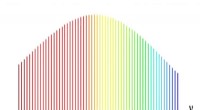
When a source of sound moves, the frequency heard by the observer is less than that of the source if the source is moving away from the observer. This is known as the Doppler effect. The Doppler effect occurs when a wave source is moving relative to an observer. The waves emitted by the source are compressed in the direction of motion and stretched out in the opposite direction. This causes the frequency of the waves to increase in the direction of motion and decrease in the opposite direction.
In the case of a sound source, if the source is moving away from the observer, the waves will be stretched out in the direction of the observer. This will cause the frequency of the sound heard by the observer to decrease. The amount of decrease in frequency depends on the speed of the source and the distance between the source and the observer.