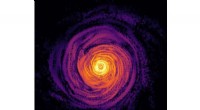
1. Coriolis Effect: The Coriolis effect is a deflection or curvature in the path of moving objects due to the rotation of the Earth. It acts on any moving object, including air masses and storms, and causes a net deflection to the right in the Northern Hemisphere and the left in the Southern Hemisphere. The rotation of the Earth influences air movement, causing large-scale storm systems to develop and rotate in a counterclockwise direction in the Northern Hemisphere and a clockwise direction in the Southern Hemisphere.
2. Pressure Gradients: Weather fronts and storm systems often form due to differences in air pressure. Air tends to move from high-pressure areas (anticyclones) to low-pressure areas (cyclones) to equalize the air pressure. In the Northern Hemisphere, prevailing wind patterns and the Coriolis effect cause the winds to circulate counterclockwise around low-pressure systems. This circulation, combined with the temperature and moisture differences, contributes to the formation and rotation of storms.
3. Thermal Circulation: Thunderstorms and convective systems can also demonstrate circular or rotational motion. These systems form when warm, moist air rises rapidly due to temperature differences, creating updrafts and downdrafts. The rotation in such storms is often influenced by the environmental wind shear and the interaction between different layers of the atmosphere.
4. Jet Stream Interaction: Jet streams are fast-flowing air currents high in the atmosphere. When weather systems interact with jet streams, their movement and rotation can be influenced by the direction and speed of these jet streams.
It's important to note that not all storms move in a circular pattern. For example, some storms, like squall lines or frontal systems, may exhibit linear or straight-line movement. The type and movement of storms are determined by various atmospheric conditions and forces that influence wind patterns, temperature differences, and air pressure distributions.