A stroboscope is a device that flashes light at a regular interval. If the flash rate is synchronized with the object's motion, the object will appear to be frozen in place. This is because the object will be in the same position every time the strobe light flashes.
This method cannot be used to detect whether an object is moving if the velocity exceeds approximately half the distance between flashes divided by flash duration. For typical values (flash period 10 ms , width 1 us) an object moving more than approximately 30 mph cannot by frozen. For a motion blur to become obvious the relative object motion needs to exceed five time that value, around 5 meters per second or greater. This does not mean motion cannot be sensed: one's ability to "freeze" and detect very fast events comes from the persistence of vision and brain action: this is how radar guns for measuring car speed can work with sub-microsecond radar pulses, and a tennis player can return fast balls.
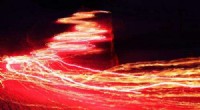
2. Use a camera with a slow shutter speed.
A camera with a slow shutter speed will blur moving objects. The amount of blur will depend on the object's speed and the shutter speed. If the object is moving too slowly to see, the blur will be very slight. See above, however.
3. Observe the object for a long period of time.
If an object is moving very slowly, you may not be able to see it moving at all if you only observe it for a short period of time. However, if you observe the object for a long period of time, you may eventually see it move. Be prepared, however, the movement may very likely turn out to be Brownian motion rather than significant bulk motion of all of the particle in one direction. (See below)
Note in these methods only #3 allows observation directly by unaided human senses for velocities lower than those that can induce motion blur at human shutter speeds