1. Reflection: The light ray undergoes reflection, which means it bounces off the surface of the mirror and changes its direction. The angle of incidence (the angle at which the light ray strikes the mirror) is equal to the angle of reflection (the angle at which the light ray bounces off the mirror).
2. Image Formation: The reflected light rays appear to come from a virtual image behind the mirror. This image is called a virtual image because it cannot be projected onto a screen or captured on a camera. It is an optical illusion created by the reflection of light.
3. Formation of Regular and Irregular Reflections: Mirrors can produce either regular or irregular reflections. Regular reflections occur when parallel light rays strike a flat mirror and are reflected in parallel, resulting in a clear and undistorted image of the object. Irregular reflections occur when non-parallel light rays strike an irregular or curved mirror, resulting in a distorted or fragmented image.
4. Change in Direction: The direction of the reflected light ray depends on the orientation of the mirror. If the mirror is flat, the reflected light ray will be reflected in the opposite direction of the incoming light ray. If the mirror is curved or tilted, the reflected light ray will be redirected in a different direction.
5. Conservation of Energy: The law of conservation of energy applies to the reflection of light. The total energy of the incident light ray is equal to the total energy of the reflected light ray. Although the direction of the light ray changes, its energy remains the same.
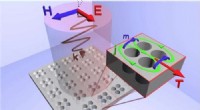
6. Polarization: Certain types of mirrors, such as dichroic mirrors, can cause the polarization of light waves. This means that the reflected light waves exhibit a preferential orientation of their electric fields, either parallel or perpendicular to the surface of the mirror.
These are the fundamental phenomena that occur when a ray of light interacts with a mirror. The specific effects depend on the type of mirror (flat, curved, dichroic, etc.) and the characteristics of the incoming light ray.