1. Object's Mass: The more massive an object is, the greater its inertia, and the more force is needed to accelerate it. Therefore, more massive objects have a higher terminal velocity.
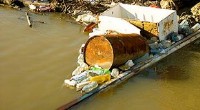
2. Fluid's Density: The denser the fluid, the more resistance it provides to the object's motion. Objects falling through dense fluids, like water, have a lower terminal velocity compared to falling through less dense fluids like air.
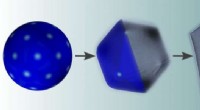
3. Object's Shape and Surface Area: Streamlined shapes, like teardrop or spherical shapes, experience less air resistance than flat or irregular shapes. A streamlined shape reduces drag and allows for a higher terminal velocity. Additionally, increasing the surface area of an object, like using a parachute, increases air resistance and decreases terminal velocity.
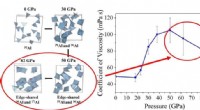
4. Fluid's Viscosity: Viscosity represents the "thickness" or resistance to flow within the fluid. Fluids with higher viscosity, such as honey, provide more resistance to the object's motion compared to fluids with lower viscosity, like water. Higher viscosity leads to a lower terminal velocity.
5. Gravity: The strength of the gravitational force acting on the object also affects terminal velocity. On Earth, the gravitational force is relatively constant, but if an object were falling on another planet or celestial body with different gravity, its terminal velocity would be different.
In summary, terminal velocity is determined by the object's mass, the density of the fluid, the object's shape and surface area, the fluid's viscosity, and the gravitational force.