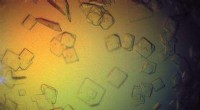
Solids have a fixed shape and volume, and the particles (atoms, molecules, ions) that make them up are tightly packed together. The particles in a solid vibrate about their fixed positions, but do not move around significantly. Solids are generally rigid and incompressible.
Liquids have a fixed volume but not a fixed shape, and the particles that make them up are more loosely packed than in solids. The particles in a liquid can move around more freely than in a solid, but they are still held together by intermolecular forces. Liquids are generally fluid and take the shape of their container.
Gases do not have a fixed shape or volume, and the particles that make them up are far apart from each other. The particles in a gas move around very quickly and randomly, and they are not held together by intermolecular forces. Gases are generally compressible and expand to fill their container.
Plasma is a hot, ionized gas that is made up of positively charged ions and negatively charged electrons. Plasma is often referred to as the "fourth state of matter", and it is found in stars, the sun, and the aurora borealis.
Bose-Einstein condensate (BEC) is a state of matter that occurs when a large number of bosons (particles with integer spin) are cooled to very low temperatures. In this state, the bosons lose their individuality and behave as a single "superatom". BECs are currently being studied for their potential applications in quantum computing and other technologies.