Excitons are quasiparticles that describe the excited state of a semiconductor material. They consist of an electron and a hole that are bound together by Coulombic forces. In the context of ultrafast spectroscopy, the character of excitons can be either atomic-like or solid-like.
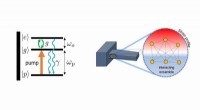
- Atomic-like excitons are characterized by a well-defined energy spectrum and a long lifetime. They behave similarly to atoms, with discrete energy levels and well-defined selection rules for optical transitions. Atomic-like excitons are typically found in low-dimensional semiconductors, such as quantum wells and quantum dots.
- Solid-like excitons are characterized by a continuous energy spectrum and a short lifetime. They behave more like particles in a solid, with a continuous band of energy states and a variety of optical transitions. Solid-like excitons are typically found in bulk semiconductors.
The character of excitons in the ultrafast regime can be controlled by a number of factors, including the material system, the excitation energy, and the temperature. By understanding the dual character of excitons, researchers can tailor the optical properties of semiconductor materials for a variety of applications, such as light-emitting diodes, solar cells, and lasers.
The dual character of excitons in the ultrafast regime has a number of applications, including:
- Light-emitting diodes (LEDs): Excitons can be used to create efficient LEDs by using the energy released by their recombination to emit light. LEDs are used in a variety of applications, including displays, lighting, and traffic signals.
- Solar cells: Excitons can be used to generate electricity in solar cells by using the energy released by their recombination to separate electrons and holes. Solar cells are used to convert sunlight into electricity, and they are a key component of renewable energy systems.
- Lasers: Excitons can be used to create lasers by using the energy released by their recombination to amplify light. Lasers are used in a variety of applications, including cutting, welding, and medical imaging.
- Quantum computing: Excitons can be used to create quantum bits, which are the basic units of quantum information. Quantum computing is a promising new technology that could revolutionize computing.