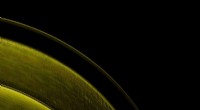
1.Kelvin-Helmholtz instability: This instability arises when two fluid layers with different densities or velocities flow past each other. The difference in speed and direction creates a shear force at the interface between the layers, which can lead to the development of waves. If the waves become sufficiently large, they can break and generate turbulence.
2.Rayleigh-Taylor instability: This instability occurs when a denser fluid is placed above a less dense fluid in a gravitational field. The gravitational force acting on the denser fluid causes it to sink and the less dense fluid to rise, leading to the formation of unstable density gradients. These gradients can amplify small disturbances and eventually break down into turbulent flow.
Both Kelvin-Helmholtz and Rayleigh-Taylor instabilities can occur without any external force or object to initiate the turbulence. They are purely fluid dynamic phenomena that arise from the interactions between the fluids themselves.