Quantum entanglement is a phenomenon where two or more particles become correlated in such a way that their states are linked, regardless of the distance between them. This non-classical behavior, predicted by quantum mechanics, defies our classical intuition and has been the subject of intense research and debate.
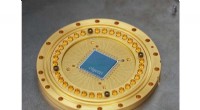
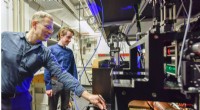
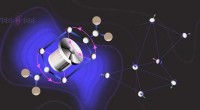
In their experiment, the physicists used a pair of ytterbium ions trapped in an optical lattice. By carefully controlling the interactions between the ions and applying tailored laser pulses, they were able to create a specific entangled state known as the "maximally entangled Bell state." In this state, the spins of the two ions are maximally correlated, meaning they are either both up or both down, with equal probability.
The researchers then measured the correlations between the ions' spins using a technique called quantum state tomography. This allowed them to reconstruct the quantum state of the system and quantify the degree of entanglement. The results showed that the entanglement between the ions was indeed enhanced compared to other entangled states.
The enhanced nonlocality observed in the experiment arises due to the specific properties of the maximally entangled Bell state. In this state, the spins of the ions are perfectly correlated, and any local measurement performed on one ion instantly affects the other, regardless of the distance between them. This behavior cannot be explained by classical physics and highlights the unique features of quantum mechanics.
The demonstration of enhanced nonlocality in ion pairs has several implications. It provides a deeper understanding of the fundamental principles of quantum mechanics and the nature of entanglement. Additionally, it could have practical applications in quantum information processing and communication. For instance, the enhanced entanglement between the ions could be exploited for secure quantum communication protocols or quantum teleportation, where quantum information is transferred between distant locations.
The study represents an important milestone in the field of quantum physics by experimentally verifying the enhanced nonlocality predicted by quantum mechanics. It opens up new avenues for exploring the limits of quantum correlations and their potential applications in quantum technologies.