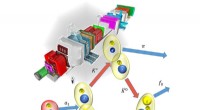
Quantum entanglement is one of the most important and counterintuitive aspects of quantum mechanics, and it has been the subject of much research and debate. It has implications for a variety of areas of physics, including quantum computing, quantum information, and the foundations of quantum mechanics.
Here is a simplified analogy to help you understand quantum entanglement:
Imagine you have two coins that are identical in every way. You flip both coins, and they both land heads. You then put one coin in your pocket and give the other coin to a friend who lives far away.
If you later measure the state of your coin, you will know that the state of your friend's coin is also heads. This is because the two coins are entangled, and the measurement of one coin's state instantly affects the state of the other, even though they are separated by a large distance.
Quantum entanglement is a real and well-established phenomenon that has been experimentally verified many times. It is one of the most important and counterintuitive aspects of quantum mechanics, and it has implications for a variety of areas of physics.
Here are some of the key properties of quantum entanglement:
* Entangled particles are correlated in such a way that the measurement of one particle's state instantly affects the state of the other, even if they are separated by a large distance.
* Quantum entanglement is not limited to two particles. It can occur between any number of particles.
* Quantum entanglement is not affected by the distance between the entangled particles. The particles can be separated by any distance, and the entanglement will still persist.
* Quantum entanglement is a real and well-established phenomenon that has been experimentally verified many times.
Quantum entanglement is one of the most important and counterintuitive aspects of quantum mechanics, and it has implications for a variety of areas of physics. It is an active area of research, and scientists are continuing to learn more about this fascinating phenomenon.