Abstract:
The relationship between quantum mechanics, the fundamental theory of nature at the microscopic level, and classical physics, which governs the macroscopic world we experience, has been a topic of intense scientific debate and scrutiny. In this experiment, we investigate the transition from quantum to classical behavior in a controlled environment, seeking to understand how the puzzling predictions of quantum mechanics can give rise to the familiar and predictable characteristics of classical physics.
Experimental Setup:
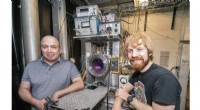
The experiment is centered around a meticulously designed quantum system that allows for precise manipulation and observation of quantum states. This system could involve, for example, an array of trapped ions, superconducting qubits, or ultracold atoms, where quantum effects can be carefully orchestrated and measured.
Quantum Coherence and Decoherence:
At the heart of the quantum-to-classical transition lies the concept of quantum coherence. We manipulate the quantum system to exhibit coherent superpositions of states and observe the evolution of these superpositions over time. Simultaneously, we introduce controlled sources of decoherence, which represent interactions of the quantum system with its environment that can cause the loss of coherence and transition towards classical behavior.
Measurement Techniques:
We employ sophisticated measurement techniques to reveal the quantum nature of the system and its transition to classical behavior. This may include quantum tomography, which allows us to reconstruct the quantum state of the system, and precision measurements of various physical observables to study their behavior under different levels of decoherence.
Data Analysis and Modeling:
The experimental data is meticulously analyzed and compared to theoretical models that describe the quantum-to-classical transition. We employ statistical techniques to quantify the degree of quantumness and classicality in the system and explore how decoherence affects the transition between these regimes.
Classical Limit:
As the level of decoherence increases, we expect to observe the emergence of classical behavior. We investigate under what conditions the system's properties become consistent with classical physics, characterized by the absence of quantum coherence and the restoration of familiar classical phenomena.
Implications:
The findings from this experiment have profound implications for our understanding of the foundations of physics and the relationship between the quantum and classical worlds. By shedding light on the mechanisms underlying the quantum-to-classical transition, we advance our knowledge of how the intricate quantum realm gives rise to the intuitive laws of classical physics that have shaped our understanding of the macroscopic universe.
This experiment represents a significant step forward in the exploration of quantum-classical connections, offering insights into the fundamental nature of reality and opening up new avenues for research and technological applications at the intersection of quantum and classical physics.