Introduction:
Physics often gets a reputation for being a field of complex theories and abstract concepts, but what if we could find its exciting principles in something as simple and enjoyable as cycling? From pushing off the pedals to the rush of wind against your skin, cycling provides a perfect setting to explore the very essence of physics.
Breaking Inertia - Pedaling and Force:
Imagine starting your bicycle from a standstill. As you push down on the pedals, you apply a force that overcomes inertia, the resistance of an object to changes in its motion. With each pedal rotation, you impart energy, increasing the bike's velocity and setting it into motion. This simple act demonstrates Newton's First Law of Motion.
Balancing Forces - Riding Upright:
Balance is a crucial skill in cycling. Staying upright requires a continuous interplay of forces. Your body weight exerts downward force, while your legs counter it with an equal upward force through the pedals. Simultaneously, you employ steering force to keep the bike in line - a combination of gravitational and muscular forces that harmoniously maintain equilibrium.
Energy Transfer - Coasting and Braking:
After pedaling hard, release the pedals and enjoy the glide. This is the concept of kinetic energy, which keeps you going without constantly applying force. Upon deciding to stop, you apply brakes, converting kinetic energy into heat and sound through friction. Energy transformation happens in real-time, just as various energy forms intertwine in the world of physics.
Air Resistance and Drag - Aero Dynamics:
Cycling brings you face to face with the concept of air resistance or drag. As you speed up, the air pushes against you with increasing force, slowing you down. Professional cyclists don sleek, aerodynamic outfits and position their bodies to minimize drag, demonstrating their understanding of fluid mechanics and aerodynamic principles.
Momentum Conservation - Group Rides:
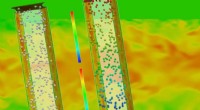
Riding within a group presents an intriguing observation. When drafting - positioning yourself close behind another cyclist - you encounter less air resistance, allowing for easier pedaling. This group effect is related to 'momentum conservation,' where total momentum within the group remains constant, facilitating speed maintenance.
Conclusion:
Cycling is not just a fun activity but an interactive lesson in physics. It offers a captivating blend of forces, energy transformations, and aerodynamics, all in a real-world setting. From overcoming inertia to conserving momentum, there's a universe of physics principles to discover with each pedal stroke. So, hit the cycle paths, embrace the dynamic world of physics, and see how the seemingly abstract translates into the thrilling adventures of cycling. Ride on, physicist-in-the-making!