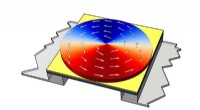
Self-organization is a process in which order emerges from chaos without the need for external control or guidance. It is a common phenomenon in nature, observed in a wide variety of systems, from the formation of snowflakes to the flocking of birds.
Self-organization is often driven by positive feedback loops, in which the output of a process reinforces the input, leading to a snowball effect. For example, in the case of snowflakes, the initial formation of ice crystals creates a surface on which water molecules can more easily attach, leading to the growth of larger and more complex structures.
Emergence
Emergence is closely related to self-organization, but it refers specifically to the appearance of new properties or behaviors that cannot be predicted from the individual components of a system. For example, the emergence of consciousness from the interactions of neurons in the brain is an example of an emergent phenomenon.
Emergence is often associated with complex systems, which are characterized by a large number of interacting components and a high level of interconnectedness. These systems are often difficult to understand or predict, but they can give rise to rich and surprising behaviors.
Order from chaos
The emergence of order from chaos is a fundamental principle of nature, and it has been studied by scientists for centuries. The study of complex systems has provided insights into how order can arise from seemingly random processes, and this has led to a new understanding of the universe.
The emergence of order from chaos is a powerful concept that has applications in many fields, from biology to economics. It is a reminder that even in the midst of chaos, there is always the potential for order to emerge.
Examples of order emerging from chaos
* The snowflake: Snowflakes are a beautiful example of self-organization. They form when water molecules attach themselves to ice crystals in a symmetrical pattern. This pattern is driven by the molecular structure of water, which allows for the formation of hydrogen bonds.
* The flock of birds: Birds flock together for a variety of reasons, including protection from predators, finding food, and staying warm. The flocking behavior is emergent, and it arises from the interactions of individual birds with each other.
* The human brain: The human brain is the most complex object in the known universe. It is composed of billions of neurons, which are connected to each other in a vast network. The brain is able to give rise to a wide range of emergent phenomena, including consciousness, thought, and language.
* The economy: The economy is a complex system that is constantly evolving. It is driven by the interactions of individuals, businesses, and governments. The economy is often unpredictable, but it can also be remarkably resilient.
These are just a few examples of the many ways in which order can emerge from chaos. It is a fundamental principle of nature, and it is a reminder that even in the midst of chaos, there is always the potential for order to emerge.