In a nondescript building on the outskirts of Boulder, Colorado, a team of scientists is working on a clock that could revolutionize our understanding of the universe. The clock, known as the atomic clock, is the most precise timekeeping device ever created. It is so precise that it could potentially be used to detect new particles and forces, and even to test the laws of physics.
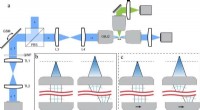
The atomic clock works by measuring the vibrations of atoms. When atoms are exposed to a specific frequency of light, they vibrate at a specific rate. This rate is incredibly precise, and it does not change over time. This makes atomic clocks ideal for measuring time.
The current atomic clock is so precise that it can measure the passage of time to within one second every 300 million years. This means that it could potentially be used to detect changes in the laws of physics that occur over long periods of time.
For example, some physicists believe that the laws of physics may be changing as the universe expands. If this is true, the atomic clock could be used to detect these changes. The clock could also be used to test other theories in fundamental physics, such as the theory of relativity and the Standard Model of particle physics.
The atomic clock is still under development, and it may be several years before it is ready for use in fundamental physics experiments. However, the potential rewards are enormous. If the clock can be used to detect new particles and forces, or to test the laws of physics, it could revolutionize our understanding of the universe.
Here are some specific ways that the atomic clock could be used to transform fundamental physics:
* To detect new particles: The atomic clock could be used to detect the presence of new particles that are predicted by theories beyond the Standard Model. For example, the clock could be used to detect the presence of dark matter, a mysterious substance that makes up about 27% of the universe but has never been directly observed.
* To test the laws of physics: The atomic clock could be used to test the laws of physics, such as the theory of relativity and the Standard Model of particle physics. For example, the clock could be used to test whether the speed of light is constant or whether it varies over time.
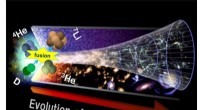
* To study the evolution of the universe: The atomic clock could be used to study the evolution of the universe. For example, the clock could be used to measure the rate at which the universe is expanding.
The atomic clock is a powerful tool that has the potential to revolutionize our understanding of the universe. As the clock continues to be developed, it is likely that we will see even more groundbreaking discoveries in the years to come.