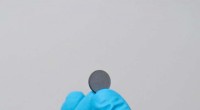
The new technique, called microfluidics-based particle image velocimetry (µPIV), uses a tiny chip to measure the velocity of water flowing through a small channel. The chip is made of a transparent material, such as glass or plastic, and has a series of tiny holes etched into it. Water flows through the holes, and the researchers use a high-speed camera to record the movement of tiny particles in the water.
By analyzing the videos, the researchers can calculate the velocity of the water flowing through the channel. The technique is very accurate and can measure velocities down to a few micrometers per second.
µPIV has a number of advantages over traditional methods of measuring water flow. First, it is very small, so it can be used in places where traditional methods cannot. Second, it is very accurate, so it can be used to measure very small changes in water flow. Third, it is very fast, so it can be used to measure water flow in real time.
The researchers believe that µPIV has the potential to revolutionize the way we measure water flow. It could lead to more efficient and accurate water management systems, which could save money and help to protect the environment.
The study was published in the journal Applied Physics Letters.