Ring polymers are a type of polymer where the chain of monomers forms a closed loop, resembling a ring or a circle. They differ from linear polymers, which have a chain with two free ends. Understanding the behavior of ring polymers is important in various fields, including drug delivery systems, personal care products, and food additives.
When a fluid is subjected to shear stress, such as when one layer of fluid moves parallel to another at a different speed, polymer chains usually align with the flow. This behavior is known as chain stretching and is well-described by existing theories. However, the Cambridge researchers found that ring polymers under shear display more intricate motion patterns.
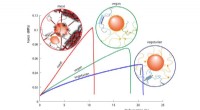
Using a combination of simulations and experiments, the researchers observed that ring polymers undergo dynamic changes in their shape and orientation under shear. They found that the rings can flip between different conformations, such as flattening, twisting, and tumbling, leading to complex trajectories.
The study revealed that the unexpected motion patterns of ring polymers arise due to their unique topology. The closed-loop structure of the rings allows for more complex deformations and interactions compared to linear polymers, resulting in the observed flipping behavior.
Furthermore, the researchers found that the dynamics of ring polymers under shear depend on various factors such as the size of the rings, the concentration of the polymer solution, and the shear rate. This complexity opens up new possibilities for controlling the behavior and properties of complex fluids by manipulating these parameters.
The discovery of these unconventional motion patterns in ring polymers under shear expands our understanding of the physics of complex fluids and has potential implications in fields such as rheology, polymer science, and materials design. It highlights the need for further research to unravel the intricate behavior of these systems and unlock their potential applications.
In conclusion, the study conducted by physicists at the University of Cambridge sheds light on the unexpected and complex motion patterns of ring polymers under shear. This groundbreaking finding challenges traditional theories and opens new avenues for research, offering insights that could lead to advancements in various scientific and industrial domains.