While Schrödinger's cat is a fascinating thought experiment, it also has real-world applications in the field of quantum computing.
* Qubits are the basic unit of quantum information, and they can be used to perform calculations that are impossible for classical computers.*
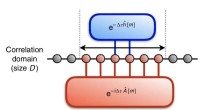
One way to create qubits is to use the superposition of states. For example, a qubit could be represented by a single electron that is spinning either clockwise or counterclockwise. In this case, the electron would be in a superposition of states, and it would be both spinning clockwise and counterclockwise at the same time.
This superposition of states is what makes qubits so powerful. It allows them to perform calculations that are impossible for classical computers.
* For example, a quantum computer could factor a large number in polynomial time, while a classical computer would take exponential time.*
Schrödinger's cat provides a way to understand the superposition of states and its potential applications in the field of quantum computing.
- Here are some specific ways that Schrödinger's cat makes better qubits:
• Increased coherence time: The coherence time of a qubit is the amount of time that it can maintain its superposition of states. This is important because qubits that decohere quickly are not useful for quantum computing. Schrödinger's cat provides a way to increase the coherence time of qubits by isolating them from the environment.
• Reduced noise: Noise is another factor that can decohere qubits. Schrödinger's cat provides a way to reduce noise by isolating the qubits from external sources of noise.
• Improved error correction: Quantum error correction is a technique that can be used to correct errors that occur during quantum computations. Schrödinger's cat provides a way to improve the efficiency of quantum error correction by allowing for the use of more powerful error correction codes.
Overall, Schrödinger's cat is a valuable tool for understanding and improving qubits. It has the potential to revolutionize the field of quantum computing and open up new possibilities for scientific research and technological development.