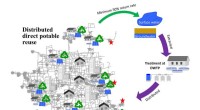
1. Shared Concept of Interconnectedness: Both terms describe complex networks of interacting parts that function together.
* System: A system is any group of interacting, interrelated, or interdependent components that form a unified whole. This could be a mechanical system, a social system, or even a system within a living organism.
* Ecosystem: An ecosystem is a biological community of interacting organisms and their physical environment. It emphasizes the interactions between living (biotic) and non-living (abiotic) components.
2. "Ecosystem" is a Type of System: An ecosystem is a specific type of system, focusing on the interconnectedness of life and environment.
* Broader Scope: The concept of "system" is much broader and encompasses a wide range of phenomena.
* Specialized Focus: "Ecosystem" is a more specific term, emphasizing the interactions between living organisms and their physical environment.
Example:
* System: A car is a system with interacting parts like the engine, wheels, and transmission.
* Ecosystem: A rainforest is an ecosystem with interacting plants, animals, insects, fungi, bacteria, and environmental factors like rainfall and sunlight.
In summary: While "system" is a broad term encompassing any network of interacting parts, "ecosystem" is a specific type of system focusing on the interconnectedness of living organisms and their environment.