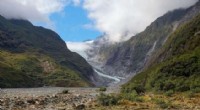
Windward Side:
* Precipitation: The windward side receives the brunt of the wind carrying moisture. As the air is forced to rise over the mountain, it cools, causing the moisture to condense and form clouds, leading to heavy precipitation in the form of rain or snow.
* Temperature: The windward side experiences lower temperatures than the leeward side due to the cooling effect of the rising air.
* Vegetation: The windward side often supports lush, dense vegetation due to the abundant rainfall and cooler temperatures. This can include forests, meadows, and other plant communities.
Leeward Side:
* Precipitation: As the air descends on the leeward side of the mountain, it warms and becomes drier, leading to a rain shadow effect. This results in lower precipitation compared to the windward side.
* Temperature: The leeward side is typically warmer than the windward side because the descending air is compressed and warms.
* Vegetation: The leeward side often has sparse vegetation due to the lack of precipitation and drier conditions. This can include desert-like conditions, grasslands, or scrublands.
Key Takeaways:
* The windward side of a mountain receives more precipitation and has cooler temperatures than the leeward side.
* The leeward side experiences a rain shadow effect, resulting in less precipitation and warmer temperatures.
* These differences in climate lead to distinct variations in vegetation and overall ecosystems on either side of the mountain.
Examples:
* The Sierra Nevada Mountains in California: The western slope receives heavy snowfall, creating a lush forest environment. The eastern slope is much drier and receives less precipitation, supporting a semi-arid ecosystem.
* The Himalayan Mountains: The southern slopes are covered in dense forests and receive heavy rainfall from the monsoon winds. The northern slopes are drier and colder, supporting a high-altitude desert environment.