1. Geology:
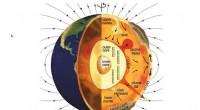
* Plate Tectonics: This theory explains how the Earth's crust is divided into large plates that move and interact with each other. These interactions, like subduction, collision, and spreading, shape continents and create mountains, valleys, and oceans.
* Continental Drift: This theory, a precursor to Plate Tectonics, proposed that continents were once joined together as a single supercontinent, Pangaea, and gradually drifted apart over millions of years.
* Rock Formations: Different types of rocks found on continents, like igneous, sedimentary, and metamorphic, provide clues about their formation and history.
* Geological Processes: Processes like weathering, erosion, and deposition constantly reshape the Earth's surface, influencing the shapes of continents.
2. Geography:
* Landforms: Geographers study the different features of the Earth's surface, including mountains, plains, plateaus, and coastlines. These landforms are shaped by geological processes and contribute to the overall shape of continents.
* Climate: Weathering and erosion are heavily influenced by climate, which varies across continents and influences their shapes.
* Oceanography: The interactions between continents and oceans, including currents, tides, and waves, play a role in shaping coastlines and influencing the overall form of continents.
3. Physics:
* Gravity: Gravity plays a role in shaping the Earth's surface, influencing the formation of mountains and the movement of tectonic plates.
* Forces and Motion: The forces involved in plate tectonics, such as friction and pressure, contribute to the movement and interaction of tectonic plates, which ultimately shape continents.
4. Biology:
* Biogeography: This field examines the distribution of organisms across the Earth, and how biological processes like plant growth and animal activity influence the formation and evolution of continents.
* Paleontology: The study of fossils helps to understand the history of life on Earth and how organisms have evolved over time. This provides insights into the past locations and movements of continents.
It's important to remember that these disciplines are interconnected and work together to understand the complex processes that have shaped the continents we see today.