Paleoclimate Proxies:
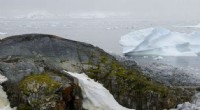
* Ice Cores: These provide a layered record of past atmospheric composition, temperature, precipitation, and volcanic activity. They are particularly useful for studying the last few hundred thousand years.
* Sediment Cores: Taken from lakes, oceans, and bogs, these cores offer insights into past changes in vegetation, water chemistry, and sediment deposition.
* Tree Rings: Annual growth rings in trees reveal information about past temperature, precipitation, and fire frequency, particularly for the last few thousand years.
* Coral Reefs: Coral skeletons contain chemical signatures that reflect ocean temperature, salinity, and nutrient levels.
* Speleothems (Cave Formations): Stalactites and stalagmites grow over time, preserving information about past rainfall, temperature, and atmospheric composition.
* Fossil Pollen: Analyzing the types and abundance of pollen preserved in sediments reveals past vegetation patterns, which are linked to climate.
* Fossil Diatoms: These microscopic algae are sensitive to water temperature, salinity, and nutrient levels.
* Fossil Foraminifera: Similar to diatoms, these single-celled organisms offer insights into past ocean conditions.
Other Evidence:
* Geomorphological Features: Landforms like glacial valleys, sand dunes, and river terraces provide evidence of past climates and geological events.
* Historical Records: Written accounts, archaeological artifacts, and artwork can provide insights into human responses to past environmental changes.
* Isotopes: Analyzing the ratios of different isotopes (e.g., oxygen isotopes in ice cores or fossils) can reveal past temperatures and precipitation levels.
Choosing the Best Indicator:
The best indicator for a particular situation depends on factors such as:
* Time period: Different proxies are more valuable for different time periods.
* Location: Proxies like ice cores are only useful in polar regions, while sediment cores can be found in many environments.
* Environmental factor: Different proxies are better suited for studying specific variables (e.g., temperature, precipitation, or atmospheric composition).
Ultimately, a combination of different indicators is often used to reconstruct a comprehensive picture of ancient environmental conditions and climates.