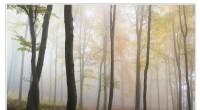
* Density of trees: This refers to the number of trees per unit area. By this measure, some of the thickest forests include:
* Amazon rainforest: With an estimated 400 billion trees, it holds the record for sheer number, but density varies throughout.
* Taiga (Boreal forest): Stretching across vast areas in Russia, Canada, and Scandinavia, it boasts high tree density in some regions.
* Tropical rainforests in Southeast Asia: Dense stands of trees and a complex canopy structure make them visually impressive.
* Canopy closure: This measures how much of the sky is blocked by the tree crowns. Forests with high canopy closure feel the most "thick" and can be found in:
* Tropical rainforests: The dense canopy creates a shaded, humid atmosphere.
* Temperate rainforests: The Pacific Northwest in the United States and parts of Chile are notable examples.
* Biomass: This refers to the total weight of living organisms in a given area. Forests with high biomass are often considered "thick" because of their dense vegetation.
* Amazon rainforest: Holds the record for the highest biomass due to its large number of trees and diverse plant life.
* Tropical rainforests: Dense stands of trees contribute to high biomass.
Ultimately, the "thickest" forest depends on how you define the term. Each of these forests offers its own unique characteristics and contributions to the planet.