1. Mountains:
* Himalayas: These towering peaks form a natural barrier between India, China, Nepal, Bhutan, and Pakistan. They are difficult to cross, making them an effective border for centuries.
* Andes Mountains: These mountains run along the western edge of South America, creating a natural border between Chile and Argentina, as well as separating countries like Colombia, Ecuador, Peru, and Bolivia.
* Appalachian Mountains: These mountains act as a dividing line between the Eastern and Midwestern regions of the United States.
* Rocky Mountains: These mountains form the Continental Divide in North America, separating rivers that flow east to the Atlantic Ocean from those that flow west to the Pacific.
2. Rivers:
* Rio Grande: This river forms a significant portion of the border between the United States and Mexico.
* Danube River: This river flows through several European countries, including Germany, Austria, Hungary, Serbia, Romania, and Bulgaria. It has historically served as a natural border and a trade route.
* Amazon River: The Amazon River is a major geographic and political feature, forming a natural border between Brazil and several other South American countries, including Peru, Colombia, and Ecuador.
* Nile River: This river flows through eleven countries in northeastern Africa, often acting as a natural border between them.
3. Deserts:
* Sahara Desert: The vast Sahara Desert forms a natural boundary between North Africa and sub-Saharan Africa. It is a formidable barrier, making it challenging for people and armies to cross.
* Atacama Desert: This desert in South America forms a natural border between Chile and Peru.
* Gobi Desert: This desert in Asia forms a natural boundary between China and Mongolia.
4. Oceans:
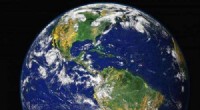
* Atlantic Ocean: This vast body of water separates Europe and Africa from North and South America.
* Pacific Ocean: This ocean separates Asia and Australia from North and South America.
* Indian Ocean: This ocean separates Africa, Asia, and Australia.
5. Lakes:
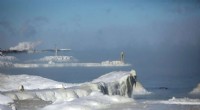
* Great Lakes: These lakes form a natural border between the United States and Canada.
* Lake Titicaca: This lake, located in the Andes Mountains, is shared by Bolivia and Peru.
* Lake Victoria: This lake, the largest in Africa, is bordered by Kenya, Uganda, and Tanzania.
6. Other features:
* Volcanic Chains: In Iceland, a volcanic chain defines the border between the North American and Eurasian tectonic plates.
* Faults: The San Andreas Fault in California is a major geological feature that serves as a boundary between tectonic plates and influences the landscape.
These examples illustrate how natural features serve as important geopolitical boundaries, shaping the borders of states, nations, and continents. The features have often played a significant role in shaping historical events, influencing trade, migration, and conflict.