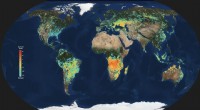
Here's why we see a lot of green:
* Vegetation: The most prominent reason for the green hue is the abundance of vegetation on Earth. Plants contain chlorophyll, which absorbs most wavelengths of light except green, which is reflected back. This is why we perceive plants as green.
* Different Shades of Green: The specific shade of green varies depending on the types of plants, their health, and the time of year. For example, forests appear darker green than grasslands.
* Other Colors: While green dominates, other colors are also visible from space. Oceans appear blue, deserts tan or yellow, ice and snow white, and urban areas gray. The specific colors you see depend on the angle of the sunlight, the time of day, and the region being observed.
It's important to remember that color perception is subjective. What we see from space is influenced by the way our eyes and brains process information. Photographs and videos from satellites often enhance certain colors to highlight specific features, which can create a more "uniform green" appearance.
Here are some additional factors:
* Atmospheric Haze: The Earth's atmosphere can scatter and absorb light, leading to a bluish or hazy effect that can blend the colors of different land features together.
* Resolution: The resolution of images from space also plays a role. Images from low-resolution satellites will appear less detailed and more homogenous than those taken by high-resolution satellites.
Ultimately, while green is a dominant color from space, it's a simplification to say that land looks all one color. The Earth's surface is a complex tapestry of colors, textures, and features that contribute to its unique appearance.