Similarities:
* Both are non-vascular plants: This means they lack the complex vascular system of flowering plants, relying on diffusion for water and nutrient transport.
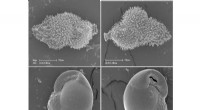
* Both reproduce via spores: They don't produce flowers or seeds. Spores are released and dispersed by wind to start new plants.
* Both require moisture: Both thrive in moist environments as they depend on water for reproduction and nutrient uptake.
* Both lack true roots, stems, and leaves: While they have structures resembling these, they are not as complex as those found in vascular plants.
* Both have a dominant gametophyte generation: Their life cycle is dominated by the haploid gametophyte stage, which produces gametes for sexual reproduction. The sporophyte, which produces spores, is dependent on the gametophyte.
* Both are relatively small: Mosses are typically low-growing, while ferns can grow larger but still lack the robust structure of flowering plants.
Important Difference:
* Ferns have vascular tissue: Though simpler than flowering plants, ferns have vascular tissue that allows for more efficient transport of water and nutrients, contributing to their larger size compared to mosses.
In summary, both mosses and ferns are considered "primitive" plants compared to flowering plants, sharing many features due to their common ancestry. However, ferns have evolved a more complex vascular system, allowing them to grow larger and more complex structures.