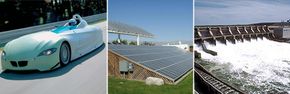
Hydrogen-powered cars, the increased use of solar cells, and hydro-electric power plants are possible ways to reduce the emission of greenhouse gases.
Photo courtesy BMW AG, Munich, Germany; DOE/NREL; SunLine Transit Agency
Basically, it all boils down to this: Don't use as much of the stuff that creates greenhouse gases. On a local level, you can help by using less energy. The electricity that operates many of the devices in our homes comes from a power plant, and most power plants burn fossil fuels to generate that power. Turn off lights when they're not in use. Take shorter showers to use less hot water. Use a fan instead of an air conditioner on a warm day.
Here are some other specific ways you can help decrease greenhouse-gas emissions:
Make sure your car is properly tuned up. This allows it to run more efficiently and generated fewer harmful gases.
Walk or ride a bike when you can. Driving your car generates more greenhouse gases than almost anything else you do.
Turn lights and other appliances off when you're not using them. Even though a light bulb doesn't generate greenhouse gas, the power plant that generates the electricity used by the light bulb probably does.
Recycle. Garbage that doesn't get recycled ends up in a landfill, generating methane; plus, recycled goods require less energy to produce than products made from scratch.
Plant trees and other plant life where you can. Plants take carbon dioxide out of the air and release oxygen.
Don't burn garbage. This releases carbon dioxide and hydrocarbons into the atmosphere.
Cars burn fossil fuel, so smaller, more fuel-efficient cars emit less CO 2, particularly hybrid cars. Walk or ride your bike if possible, or car pool on your way to work.
To really stem the emission of greenhouse gases, we need to develop non-fossil fuel energy sources. Hydro-electric power, solar power, hydrogen engines and fuel cells could all create big cuts in greenhouse gases if they were to become more common.
At the international level, the Kyoto treaty was written to reduce CO2 and other greenhouse gas emissions worldwide. Thirty-five industrialized nations have committed to reducing their output of those gases to varying degrees. Unfortunately, the United States, the world's primary producer of greenhouse gases, did not sign the treaty.
For more information on global warming and related topics, check out How Global Warming Works.
Here are some interesting links:
How Catalytic Converters Work
How Ecolodges Work
How The Eden Project Works
How Electric Cars Work
How Hybrid Cars Work
How the Hydrogen Economy Works
How Ozone Pollution Works
How Rainforests Work
How Fuel Cells Work
How Solar Cells Work
How Hydropower Plants Work
New Scientist: Climate Change
NOAA: Global Warming
ScienceGreen ScienceHow Global Warming WorksScienceGreen ScienceIs global warming irreversible?ScienceGreen ScienceWhat would it take to reverse global warming?ScienceGreen ScienceHow will global warming affect autumn?ScienceGreen ScienceIs global warming destroying Mount Everest?ScienceGreen ScienceHow does global warming affect hunting season?ScienceGreen ScienceWhat does global warming have to do with the decline in the polaScienceGreen ScienceWhat will global warming do to the wine industry?ScienceNatural DisastersDid global warming cause Hurricane Sandy?ScienceGreen ScienceHow can adding iron to the oceans slow global warming?ScienceGreen Science10 Things That Donât Disprove Global WarmingScienceGreen ScienceWhat's the Difference Between Global Warming and Climate Change?ScienceGeophysicsCould Injecting Particles Into the Stratosphere Slow Global Warming?ScienceGreen ScienceCould reversing global warming start an ice age?ScienceGreen ScienceWhat Can I Do About Global Warming?ScienceGreen ScienceCould military strategy win the war on global warming?ScienceGreen ScienceHow Carbon Offsets WorkScienceGreen ScienceHow Carbon Tax WorksScienceGreen ScienceHow Carbon Footprints WorkHomeGarden DesignIf I plant trees in my yard, will it offset global warming?EntertainmentOlympicsHow Is Global Warming Affecting the Winter Olympics?