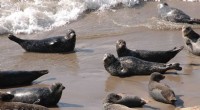
* Observations of nature: Darwin's travels on the HMS Beagle and his observations of the diversity of life, particularly in the Galapagos Islands, were crucial in forming his ideas.
* Artificial selection: The practice of selective breeding by farmers and breeders, where humans choose desirable traits, provided Darwin with a model for how natural processes could also lead to change over time.
* Thomas Malthus's work on population growth: Malthus's theory that populations tend to grow faster than their resources, leading to competition and struggle for survival, provided Darwin with a framework for understanding the pressures that drive natural selection.
* The geological work of Charles Lyell: Lyell's concept of uniformitarianism, which suggested that geological processes operate at a constant rate over time, influenced Darwin's thinking about the gradual nature of evolutionary change.
However, the concept of natural selection was not influenced by:
* Lamarckism: While Jean-Baptiste Lamarck proposed a theory of evolution based on the inheritance of acquired characteristics, Darwin rejected this idea. Natural selection emphasizes the role of variation and inheritance, not the direct transmission of traits acquired during an organism's lifetime.
* Creationism: Darwin's theory of natural selection directly challenged the prevailing view of creationism, which held that species were created by a divine being.
It is important to note that there were other contemporary theories of evolution circulating in Darwin's time, but none of them provided the same compelling explanation for the diversity of life that natural selection did.