Here's a breakdown of what's inside the Earth, from the surface inwards:
1. Crust:
* The outermost layer, relatively thin and brittle.
* Divided into oceanic crust (thinner, denser, and composed mostly of basalt) and continental crust (thicker, less dense, and composed mainly of granite).
* We live on the crust!
2. Mantle:
* The thickest layer, about 2,900 km (1,800 miles) thick.
* Composed mostly of solid rock, but it behaves like a very viscous fluid over long periods.
* The mantle is responsible for plate tectonics and volcanic activity.
* Divided into the upper mantle (including the lithosphere, the rigid outer layer of the Earth) and the lower mantle.
3. Outer Core:
* A liquid layer about 2,200 km (1,400 miles) thick.
* Primarily composed of iron and nickel.
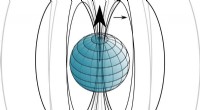
* The movement of liquid iron generates Earth's magnetic field.
4. Inner Core:
* A solid ball of iron and nickel, about 1,220 km (760 miles) in radius.
* Extremely hot (around 5,200°C / 9,392°F).
* Solid because of immense pressure, even though it's above the melting point of iron.
Key points about the Earth's interior:
* Temperature and Pressure: Increase significantly with depth.
* Composition: While mostly iron and nickel in the core, the mantle is mainly composed of silicate minerals.
* Dynamic Processes: Plate tectonics, volcanic eruptions, and earthquakes are driven by processes within the Earth's interior.
Exploring the Earth's interior:
* Seismic Waves: Studying the way seismic waves travel through the Earth allows scientists to map its structure and composition.
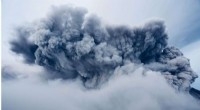
* Volcanic Rocks: Volcanic eruptions bring samples of the Earth's interior to the surface, providing insights into the mantle's composition.
* Laboratory Experiments: Scientists simulate conditions deep within the Earth in laboratories to understand the properties of materials under extreme pressure and temperature.
The Earth's interior remains a fascinating and complex subject of research. Scientists are continually learning more about this hidden world, deepening our understanding of our planet's formation and evolution.