Here's why:
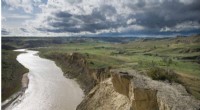
* Ecological Succession: This is the process of change in the species structure of an ecological community over time. It starts with pioneer species and progresses through various stages until a relatively stable state is reached.
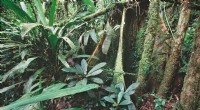
* Climax Community: This is the final, stable stage of succession. It is characterized by:
* Dominant species: These are the species that are most abundant and have the greatest influence on the ecosystem.
* Biodiversity: Usually high, reflecting a complex and well-balanced food web.
* Stability: The community is resistant to change and can withstand environmental disturbances.
It's important to note that the concept of a climax community is somewhat debated in modern ecology. The idea of a single, predictable climax community is now considered too simplistic. Instead, we understand that:
* Succession can be influenced by factors: Such as climate, soil conditions, and disturbances, leading to different climax communities.
* Dynamic equilibrium: Climax communities aren't static, but are constantly changing and adapting to ongoing environmental conditions.
Despite these nuances, the term "climax community" remains a useful concept to describe the mature and relatively stable stage of ecological succession.