Here's why:
* Biogeochemical cycles describe the movement of essential chemical elements (like carbon, nitrogen, oxygen, phosphorus) through the Earth's systems.
* Living organisms (biota) are integral to these cycles, utilizing the elements for growth, reproduction, and other processes.
* Non-living components (the lithosphere, atmosphere, hydrosphere) hold these elements in various forms, and cycles involve exchanges between the biota and these reservoirs.
Here's a simplified example:
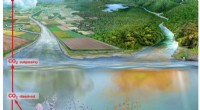
* Carbon cycle: Plants take in carbon dioxide from the atmosphere during photosynthesis, converting it into organic compounds. Animals eat these plants, consuming the carbon. Both plants and animals release carbon dioxide back into the atmosphere through respiration. When organisms die, they decompose, releasing carbon back into the soil and ultimately back to the atmosphere.
This constant movement and recycling of matter through biogeochemical cycles ensures the balance and stability of an ecosystem.