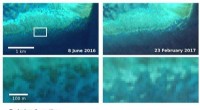
Observing
* Focus: Primarily on describing patterns and relationships in nature. It's about gathering data from the real world as it exists.
* Control: Limited control over the system being studied. Ecologists must work with the natural variation they find.
* Examples:
* Tracking the population size of a bird species over time.
* Observing how different plant species are distributed in a forest.
* Monitoring the impact of a natural disaster on an ecosystem.
* Strengths:
* Provides valuable information about real-world complexities.
* Can help identify potential relationships or hypotheses for further investigation.
* Limitations:
* Difficult to establish cause and effect relationships.
* May be influenced by confounding variables (other factors that could be affecting the observed patterns).
Experimenting
* Focus: Testing specific hypotheses about cause and effect relationships.
* Control: Manipulating variables to isolate the effect of one particular factor. This usually involves creating a control group and experimental groups.
* Examples:
* Testing the impact of different fertilizer types on plant growth.
* Assessing the effectiveness of a new method for controlling invasive species.
* Studying the effects of pollution on aquatic organisms.
* Strengths:
* Allows for a more rigorous test of a hypothesis.
* Helps establish cause and effect relationships.
* Limitations:
* Can be expensive and time-consuming.
* May not always be feasible or ethical to manipulate certain variables in natural settings.
* Results may not always translate perfectly to real-world conditions.
Key Takeaway:
Both observing and experimenting are essential tools in ecological research. They complement each other, with observation often guiding hypothesis development and experimentation providing more conclusive evidence for cause and effect relationships.