Why?
This difference in heating and cooling comes down to a few key factors:
* Specific Heat Capacity: Water has a much higher specific heat capacity than land. This means water requires more energy to raise its temperature by a certain amount compared to land.
* Transparency: Water is transparent, allowing sunlight to penetrate deeper and distribute heat more evenly. Land, on the other hand, absorbs most of the sunlight energy at the surface.
* Mixing: Water is constantly moving and mixing, spreading out heat throughout its mass. Land, being more static, tends to heat up and cool down more localized.
* Evaporation: Water loses heat through evaporation, which further moderates its temperature.
Consequences of Unequal Heating:
This unequal heating of land and sea leads to a variety of phenomena:
* Sea breezes: During the day, land heats up faster than the sea. The warm air over land rises, creating a low-pressure zone. Cooler air from the sea flows in to replace it, creating a sea breeze.
* Land breezes: At night, the land cools down faster than the sea. The cooler air over land sinks, creating a high-pressure zone. Air from the sea, now warmer, flows towards the land, resulting in a land breeze.
* Formation of clouds: When warm, moist air rises from the sea, it cools and condenses, forming clouds. This can lead to precipitation, especially in coastal areas.
* Monsoons: Seasonal shifts in wind patterns, driven by the temperature differences between land and sea, cause monsoon winds. During the summer, warm, moist air flows from the sea to the land, bringing heavy rainfall. In winter, the winds reverse, bringing drier conditions.
* Ocean currents: The unequal heating of the oceans creates a system of currents that distribute heat around the globe, influencing climate patterns.
Formation of Weather Phenomena:
The uneven heating of land and sea is a crucial factor in the formation of many weather phenomena:
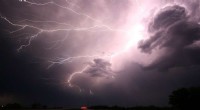
* Thunderstorms: Warm, moist air rising from heated land can form powerful thunderstorms.
* Tornadoes: Strong temperature differences between land and sea can create the unstable atmosphere needed for tornadoes.
* Hurricanes: Warm ocean waters provide the energy for hurricanes to form and intensify.
In conclusion, the difference in how land and water heat up and cool down is a fundamental driver of our weather and climate. This seemingly simple phenomenon has profound consequences, shaping everything from local breezes to global ocean currents.