Large-Scale Factors:
* Solar Radiation: The sun is the primary driver of weather. Its energy warms the Earth's surface, setting in motion atmospheric circulation patterns.
* Earth's Rotation: The Earth's rotation creates the Coriolis effect, which deflects moving air masses and influences wind patterns.
* Latitude: The angle of the sun's rays varies with latitude. Areas closer to the equator receive more direct sunlight and are generally warmer.
* Altitude: Air temperature decreases with altitude, leading to variations in weather patterns at different elevations.
* Ocean Currents: Ocean currents transport heat around the globe, influencing regional temperatures and precipitation.
* Atmospheric Pressure: Differences in atmospheric pressure create winds, which move air masses and influence weather patterns.
Small-Scale Factors:
* Topography: Mountains and valleys can alter wind patterns, creating rain shadows and influencing local temperatures.
* Land Cover: Forests, deserts, and urban areas have different thermal properties, impacting local temperatures and humidity.
* Human Activities: Pollution, deforestation, and urbanization can influence weather patterns.
Specific Weather Phenomena:
* Temperature: Determined by solar radiation, altitude, cloud cover, and other factors.
* Precipitation: Influenced by atmospheric pressure, wind patterns, temperature, and humidity.
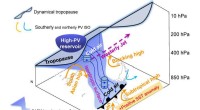
* Wind: Driven by pressure differences and influenced by the Coriolis effect and topography.
* Clouds: Formed by condensation of water vapor and can influence temperature and precipitation.
Interactions and Feedback Loops:
It's important to note that these factors interact with each other in complex ways. For example, changes in ocean temperatures can influence atmospheric pressure, which in turn can affect wind patterns and precipitation. This interplay creates a dynamic system that constantly evolves.
Predicting Weather:
Weather forecasting relies on understanding the complex interplay of these factors. Meteorologists use models, observations, and data analysis to predict future weather conditions. However, due to the complexity of the system, weather forecasting can be challenging, especially over long periods.