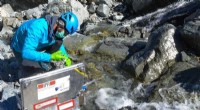
* Forest Stream as an Ecosystem: A forest stream is an ecosystem in itself. It has its own unique environment, including:
* Abiotic factors: Water temperature, flow rate, dissolved oxygen levels, sunlight penetration, and sediment type.
* Biotic factors: The community of living organisms that inhabit the stream, such as fish, insects, algae, bacteria, and fungi. These organisms interact with each other and their environment in complex ways.
* Energy flow: The stream receives energy from the surrounding forest (fallen leaves, organic matter) and from sunlight, supporting its food web.
* Forest Stream as Part of a Larger Ecosystem: The forest stream is also intimately connected to the larger forest ecosystem. It receives inputs from the forest and influences the forest in return:
* Water cycle: The stream is a vital part of the forest's water cycle. It receives water from rainfall and snowmelt and transports it downstream, influencing the distribution of moisture within the forest.
* Nutrient cycling: The stream carries nutrients from the forest floor (leaves, dead wood) and transports them downstream, influencing nutrient availability in the forest.
* Habitat: The stream provides habitat for a variety of forest animals, including birds, amphibians, and mammals.
* Forest influence: The forest shades the stream, influencing its temperature and light levels. It also provides the stream with organic matter, which serves as a food source for many organisms.
In summary:
A forest stream is an ecosystem in its own right because it has its own unique environment, biotic community, and energy flow. At the same time, it's an integral part of the larger forest ecosystem, contributing to water and nutrient cycles, providing habitat, and being influenced by the forest's conditions.