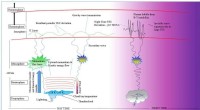
* Erosion: Wind and water break down rocks and soil, creating tiny particles that become dust.
* Decomposition: Dead plants and animals break down, releasing organic matter that can contribute to dust.
* Industrial activity: Manufacturing and construction can generate dust as a byproduct.
However, dust can have several effects, both positive and negative:
Positive:
* Soil enrichment: Dust can carry nutrients and minerals that can fertilize soil in areas where they are lacking.
* Cloud formation: Dust particles act as condensation nuclei, helping form clouds and rain.
* Plant growth: Some plants rely on dust for essential minerals and nutrients.
Negative:
* Respiratory problems: Dust can trigger allergies and respiratory issues like asthma.
* Environmental damage: Dust storms can cause significant damage to crops, infrastructure, and ecosystems.
* Climate change: Dust in the atmosphere can affect the Earth's radiative balance, impacting climate change.
Ultimately, dust is a natural phenomenon with both beneficial and detrimental effects. Its impact depends on the specific context and its composition.