Here's how it works:
* Sunlight: When sunlight travels through the atmosphere, it interacts with the tiny particles of air (nitrogen and oxygen molecules).
* Scattering: Blue light (shorter wavelengths) is scattered more than other colors (like red and orange) by these air molecules.
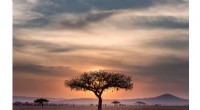
* Distant Mountains: As you look at distant mountains, the light reaching your eyes has traveled through a larger portion of the atmosphere. This means more blue light has been scattered away, leaving the remaining light with a bluish hue.
* Sky Between: The blue you see between the mountains is also due to Rayleigh scattering, but it's the scattered blue light from the sun that is reaching your eyes directly.
Therefore, the blue color of distant mountains is a result of scattered blue light from the sun, not the sky itself.