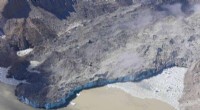
1. Organization: Living things are highly organized, with cells as their basic unit. Non-living things can also be organized, but not in the same way. For example, a rock has a defined structure, but it's not made up of cells.
2. Metabolism: Living things carry out chemical reactions to acquire and use energy. Non-living things don't have these processes. A rock doesn't "eat" or "breathe" to sustain itself.
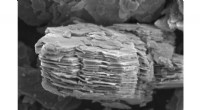
3. Growth: Living things increase in size and complexity. Non-living things may grow in size, but only through the addition of more matter (like a crystal). They don't grow in complexity.
4. Responsiveness (or Irritability): Living things react to stimuli in their environment. Non-living things don't respond in the same way. A rock won't move away from a hot surface, for example.
5. Adaptation: Living things evolve over generations to better suit their environment. Non-living things don't have this ability. A rock won't change its properties to better survive in a different environment.
6. Reproduction: Living things create offspring. Non-living things cannot reproduce themselves. A rock can't split into two rocks on its own.
7. Homeostasis: Living things maintain a stable internal environment. Non-living things don't regulate their internal conditions. A rock's temperature will fluctuate with the surroundings.
Conclusion:
While non-living things can sometimes exhibit some characteristics of life in a very limited way, like organization or growth, they don't possess all seven. The key difference is that non-living things lack the complexity and internal processes that define life.