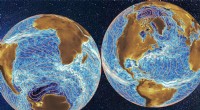
The location of a place relative to the sea and land masses significantly influences its climate. This is due to the different physical properties of water and land, leading to variations in:
1. Temperature:
* Water's High Specific Heat Capacity: Water heats up and cools down much slower than land. This means coastal areas experience less extreme temperature fluctuations throughout the year compared to inland areas.
* Ocean Currents: Warm currents bring warm water to higher latitudes, moderating coastal climates. Cold currents bring cold water to lower latitudes, cooling coastal climates.
* Landmasses: Land heats up and cools down faster than water. This results in larger temperature differences between day and night and between seasons in inland areas, leading to more extreme climates.
2. Precipitation:
* Evaporation: Water evaporates more easily from the ocean than from land. This creates moist air that can lead to higher precipitation levels in coastal areas.
* Wind Patterns: Winds blowing over oceans pick up moisture and carry it inland, contributing to rainfall.
* Orographic Lift: When moist air is forced to rise over mountains, it cools and condenses, leading to precipitation on the windward side of the mountains.
3. Other Factors:
* Altitude: Higher elevations generally have cooler temperatures and more precipitation.
* Latitude: Areas closer to the equator receive more direct sunlight and experience hotter temperatures and more rainfall.
* Ocean Basins: Large bodies of water, such as oceans, can influence climate by moderating temperature and affecting wind patterns.
Examples:
* San Francisco, California: Located on the coast with the influence of the cold California Current, San Francisco enjoys a mild climate with cool, wet winters and warm, dry summers.
* Denver, Colorado: Situated in the Rocky Mountains, Denver experiences a semi-arid climate with hot summers, cold winters, and limited rainfall.
* London, England: Located on the coast with the influence of the North Atlantic Drift, London has a temperate climate with mild winters and warm summers.
In conclusion: The location of a place relative to the sea and land significantly impacts its climate, affecting temperature, precipitation, and other factors. This understanding is crucial for understanding global climate patterns and predicting the impact of climate change.