Weathering is the process of breaking down rocks, minerals, and soils into smaller particles. This process can occur through various mechanisms such as physical weathering (e.g., freeze-thaw cycles, abrasion) and chemical weathering (e.g., dissolution, oxidation). Weathering prepares materials for erosion by creating smaller, more easily transportable particles.
Erosion, on the other hand, is the process by which weathered materials are transported from one location to another. This process can be caused by various agents, including water ( fluvial erosion), wind (aeolian erosion), ice (glacial erosion), and gravity (mass wasting). Erosion can occur regardless of whether weathering has occurred.
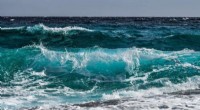
For instance, in areas with high rainfall and fast-flowing water, erosion can rapidly remove materials without significant prior weathering. In such cases, the force of flowing water is sufficient to transport even large particles without extensive physical or chemical breakdown.
Similarly, in arid environments, wind erosion can erode fine particles without significant weathering. The strong winds can pick up and carry away loose sand and dust, even in areas with minimal weathering processes.
Therefore, while weathering often precedes erosion, it is not always a prerequisite. Erosion can occur independently, particularly in environments with specific conditions and erosive agents.